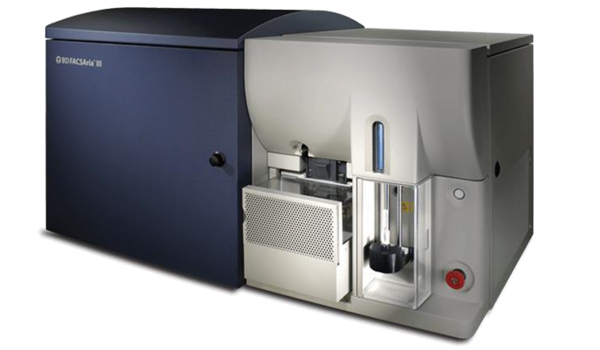
Cell and Molecular Biology
- Name of the facility / activity: Real Time PCR
- Instrument Incharge: Technical Assistant
- Department: Dr Vikram Sarabhai Institute of Cell and Molecular Biology
- Name, Model of Instrument: QuantStudio 12 K Flex
- Software name: QuantStudio software
- Calibration status: Yearly done by both operator and service engineer
Procedure for instrument startup:
- Room temperature should not be more than 20 °C.
- Switch on the Power of instrument, computer.
- After the instrument starts, open the software.
- Feed all information according to steps.
- Start the experiment.
- After complete run export data in excel & PDF file.
- Operating schedule: (gap b/w two experiments or time being experiment): At least 1hour
- Data collection / analysis: Excel file and PDF file provided to users.
Documentation:
Maintaining complete records for the calibration and performance checks of all equipment and instruments.
Introduction & Principle: In real-time polymerase chain reaction we can monitor the amplification of a targeted DNA molecule during the PCR, not at its end, as in conventional PCR. In real-time PCR, the amount of DNA is measured after each cycle via fluorescent dyes that yield increasing fluorescent signals in direct proportion to the number of PCR product molecules (amplicons) generated. Using sequence-specific primers, the number of copies of a particular DNA sequence can be determined. Quantification of amplified product is obtained using fluorescent probes or fluorescent DNA-binding dyes and real-time PCR instruments that measure fluorescence while performing the thermal cycling needed for the PCR reaction.
In Real Time PCR we can measure the amount of amplified product at each stage during the PCR cycle, quantification is possible. If a particular sequence (DNA or RNA) is abundant in the sample, amplification is observed in earlier cycles; if the sequence is scarce, amplification is observed in later cycles.
Applications: Real-time polymerase chain reaction (real-time PCR) is commonly used to measure gene expression. In the field of oncology, gene therapy, microbiology it has become the standard method for disease detection. Real-time PCR has been shown to be extremely useful for quantification of viruses and bacteria.
Requirement of Sample preparation: Chemistry of experiment plates should be match with instrument block. Sample should be properly sealed with adhesive film. No air bubbles in samples.
Do’s and Don’ts:Beware with pipetting errors. Plate should not touch from bottom side. Prepare Sample in sterile condition on Ice pack or on below temp 4 and in dark place.